
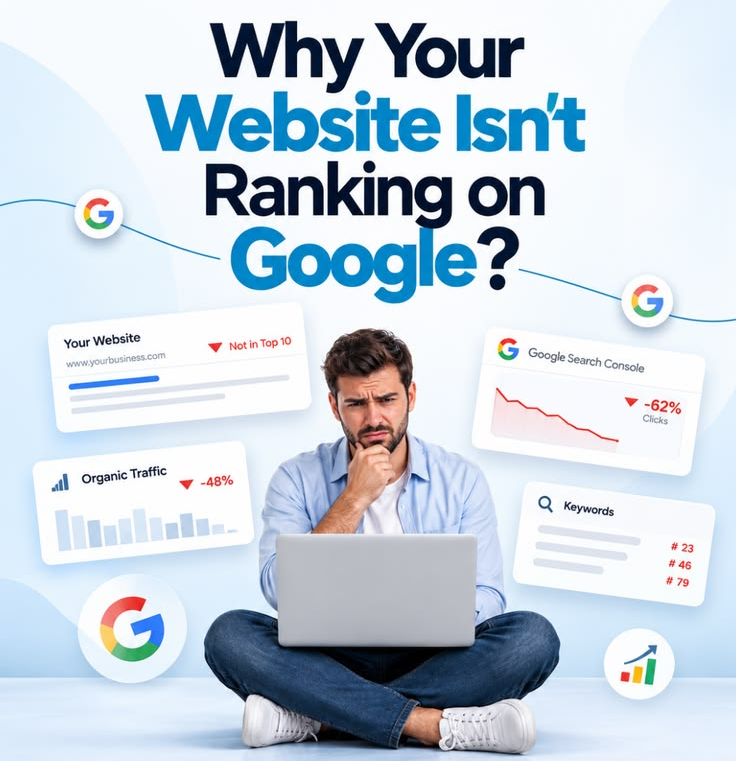
In the digital age, a website’s visibility on Google’s search results determines its reach, credibility, and revenue. Understanding why certain sites dominate the first page—and how their owners achieve it—requires a mix of technical know‑how, creative flair, and consistent digital marketing practice. This guide demystifies the process, blending industry‑accepted SEO principles with the practical insights of graphic designing, website development, and modern digital marketing.
1. Understanding Search Engines
Google’s algorithms are purpose‑built to surface content that satisfies users’ intents the fastest. They parse three primary elements when ranking a page:
1. Relevancy – How closely a page’s content matches the search query. 2. Authority – The site’s trustworthiness as judged by inbound signals. 3. User Experience – How quickly and pleasantly the page serves the visitor.
When a user types a query, Google’s index—built from billions of crawled pages—acts like a massive library, pulling the best‑matching documents and ranking them with proprietary formulas.
2. Core Ranking Factors
While Google keeps its algorithm a secret, the industry has identified several consistent signals that heavily influence a page’s organic rank.
Relevance Factors
- Keyword usage (titles, headings, meta data)
- Semantic relevance (LSI keywords, topical depth)
- Content freshness (regular updates, new insights)
Authority Signals
- Backlinks from reputable domains
- Social signals (shares, likes, discussions)
- Brand mentions across authoritative platforms
Technical Health
- Page speed (Core Web Vitals)
- Mobile‑first indexability
- Structured data (schema.org)
User Experience
- Low bounce rate
- Intuitive navigation
- Engaging visuals (graphics, video, infographics)
> Tip: In graphic designing, use clean layouts that prioritize Readability Score and Visual Hierarchy to keep users engaged.
3. On‑Page Optimization in Practice
Even the best authority can’t overcome a poorly optimized page. On‑page elements should be fine‑tuned for search engines and humans alike.
Title & Meta Description
- Concise, keyword‑rich, and unique
- Use action words that invite clicks
Headers & Sub‑Headers
- Employ H1 for title, H2 for sections, H3 for subsections
- Include secondary keywords naturally
Content Quality
- Length: 1,200–2,000 words attracts “topic authority”
- Formatting: Bullet points, tables, and numbered lists improve readability
- Multimedia: Add alt‑text for images and captions for videos
Internal Linking Strategy
- Anchor text reflects target topics
- Forces algorithms to surface related terms
> Pro Tip: In website development, ensure your content sections are modular. A modular architecture makes it easier to test and update individual components without disrupting the entire layout.
4. Technical SEO: The Behind‑the‑Scenes Backbone
Technical SEO is often overlooked but is the bedrock upon which algorithmic success is built. Here’s what to focus on:
- XML Sitemap – Submit to Google Search Console for easier crawling.
- Robots.txt – Direct subtle crawling preference.
- Canonical Tags – Prevent duplicate content penalties.
- HTTPS and Security – A non-negotiable factor for trust.
- Lazy Loading – Improves page speed but ensure accessibility.
5. Off‑Page Signals: Building Authority
While on‑page SEO sets the stage, off‑page signals cast the spotlight.
- Earning Backlinks: Guest posts, partnerships, broken‑link building.
- Influencer Outreach: Leverage brand advocates in niche communities.
- Localized Citations: For local businesses, consistent Name, Address, Phone (NAP) listings matter.
- Content Promotion: Share on LinkedIn, Twitter, and industry forums.
6. User Experience and Content Quality
Search engines reward sites that keep visitors engaged. A prolonged session duration, strong CQA (Click‑through Rate for search results) and low bounce rates signal relevancy.
Strategies to improve UX:
- Fast loading times: Compress images; use modern formats (WebP, AVIF).
- Responsive design: Mobile‑first is no longer optional.
- Clear Call‑to‑Actions: Encourage conversions.
- Accessibility: Alt tags, ARIA labels, semantic HTML.
Content Amplification with Digital Marketing Course Offerings
If you’re creating a Digital Marketing Course, align the landing pages with SEO best practices. Use a teaser infographic that can be shared across social networks, supplement the course with an e‑book that provides actionable insights, and host webinars to increase dwell time on the site.
7. The Continuous Improvement Loop
SEO is not a one‑time effort; it’s an iterative cycle that involves:
1. Running SEO audits (tools like Ahrefs, SEMrush, Moz). 2. Tracking keyword positions and traffic patterns. 3. Adjusting content based on performance data. 4. Staying updated with algorithm changelogs.
Maintaining up‑to‑date content and a robust technical stack ensures that a site remains visible as search engine criteria shift.