
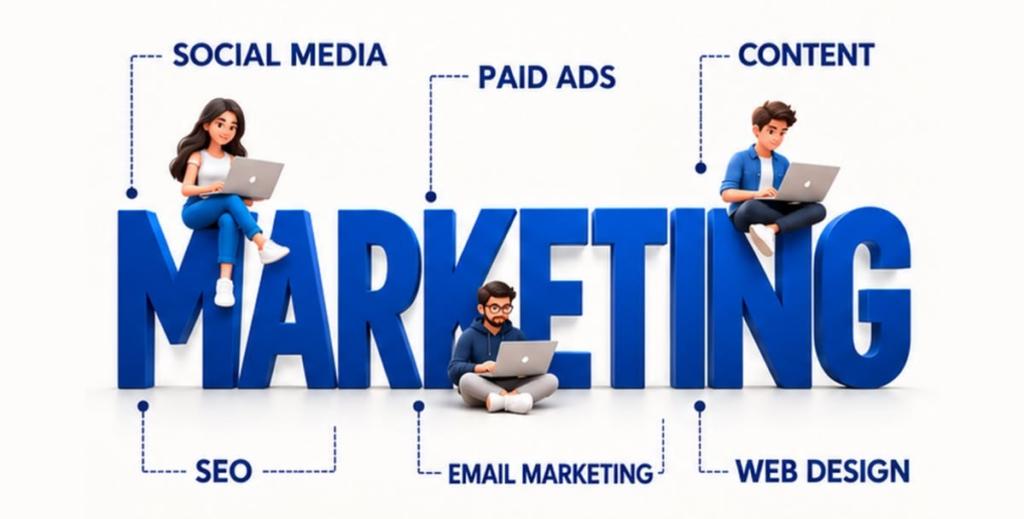
Digital marketing has become a cornerstone of modern business strategy, yet many newcomers wonder whether it’s too complex to master. The truth is that the field’s breadth can seem daunting at first, but with a structured approach and the right resources, even absolute beginners can achieve proficiency. This article breaks down the learning curve, highlights the essential components of Digital Marketing, and offers practical steps for a smooth entry into the industry.
Understanding the Learning Curve
Digital marketing is an umbrella term that encompasses a wide array of disciplines: content creation, search engine optimization (SEO), social media outreach, paid advertising, data analytics, and more. The diversity of skills required means you’ll encounter overlap with Graphic Designing, Video Editing, Website Development, and traditional marketing fundamentals.
| Discipline | Main Skillset | Typical Tools | Digital Marketing | Campaign management, analytics, copywriting | Google Analytics, HubSpot, Hootsuite | | Graphic Designing | Visual storytelling, branding | Adobe Illustrator, Canva | | Video Editing | Storyboarding, post‑production | Adobe Premiere, Final Cut Pro | | Website Development | Coding, UX/UI | HTML/CSS, WordPress, React |
Rather than viewing these as separate silos, consider them interconnected building blocks. Mastering one often reinforces your understanding of another.
Key Areas of Digital Marketing
1. Search Engine Optimization (SEO)
- On‑page: Keyword research, meta tags, internal linking.
- Off‑page: Link building, guest posting, influencer outreach.
- Technical: Site speed, mobile‑first indexing, schema markup.
2. Content Marketing
- Blog posts, white papers, e‑books, infographics.
- Repurposing content for different channels (social, email, podcasts).
3. Paid Media
- Search Engine Marketing (SEM): Google Ads.
- Social media ads: Facebook, Instagram, LinkedIn.
- Programmatic and display advertising.
4. Social Media Marketing
- Organic posts, community management, influencer collaborations.
- Data-driven content planning.
5. Email Marketing & Automation
- Segmentation, drip campaigns, A/B testing.
6. Analytics & Data Interpretation
- Conversion tracking, attribution modeling, dashboard creation.
Digital Marketing vs. Graphic Designing & Video Editing
| Skill | What You Learn | Learning Time (Essentials) | Digital Marketing | Strategy, analytics, copywriting | 3‑6 months (basic) | | Graphic Designing | Visual composition, color theory | 1‑3 months (basic) | | Video Editing | Storyboarding, motion graphics | 2‑4 months (basic) |
While each field stands on its own, a digital marketer often collaborates with designers and editors to produce cohesive campaigns. For instance, oscillating between creating compelling visuals (graphic designing) and retaining audience attention (video editing) can significantly enhance your marketing outcomes.
Tools & Resources for Beginners
- Learning Platforms: Coursera, Udemy, LinkedIn Learning.
- Certification Programs: Google Digital Garage, HubSpot Academy, SEMrush Academy.
- Community Forums: Reddit’s r/marketing, GrowthHackers, Stack Overflow for technical help.
- Analytics Suites: Google Analytics (free), Tableau (visualization), Mixpanel (product analytics).
Step‑by‑Step Learning Path
1. Fundamentals (Weeks 1‑4) – Complete an introductory Digital Marketing course. – Practice setting up a basic website using WordPress (you’ll touch on Website Development).
2. Hands‑On Practice (Weeks 5‑8) – Design a brand guide (Graphic Designing). – Create a short promotional video (Video Editing). – Run a mock SEM campaign with a small budget.
3. Deepening Knowledge (Weeks 9‑12) – Implement SEO best practices on your website. – Analyze performance data and refine tactics.
4. Specialization (Months 4–6) – Choose an area (e.g., paid media, content strategy) for deeper focus. – Earn a certification in your chosen niche.
Tip: Keep a content calendar and a performance log; these habits cement learning and provide tangible results to showcase in your portfolio.
Common Challenges & How to Overcome
- Information Overload
Solution: Focus on one pillar at a time, use a structured study plan, and set realistic goals.
- Staying Updated with Algorithm Changes
Solution: Subscribe to industry newsletters (Search Engine Land, Marketing Land), and join peer groups for real‑time updates.
- Balancing Creativity with Data‑Driven Decisions
Solution: Let data guide content ideation—use A/B tests to validate creative concepts before scaling.
- Resource Constraints for Beginners
Solution: Leverage free tools initially; many platforms offer tiers that scale with your growing skill set.
Conclusion
Digital marketing is undoubtedly a multifaceted discipline, but it isn’t inherently prohibitive for those starting from scratch. By embracing a modular learning strategy—understanding the overlap with Graphic Designing, Video Editing, and Website Development—you forge a well-rounded skill set that adapts to diverse business needs. Consistency, hands‑on projects, and continuous learning are the keys that transform the seemingly complex landscape of Digital Marketing into an accessible and rewarding career path.